


WPS in Peacekeeping: Gender Perceptions and Gaps in Mandate Integration
January 5, 2026
A recent Women Peace and Security (WPS) Office of Military Affiars (OMA) staff survey shows that while awareness of the WPS agenda is high, gender is still not fully understood as part of core peacekeeping mandates. Instead, WPS is often treated as something that sits alongside “real” operational work, rather than shaping how missions plan, deploy, and operate. Staff largely associate WPS with gender balance in contingents or with engagement with local communities, reinforcing the idea that gender is a social or people-facing issue, rather than a strategic consideration for military effectiveness and mandate delivery.
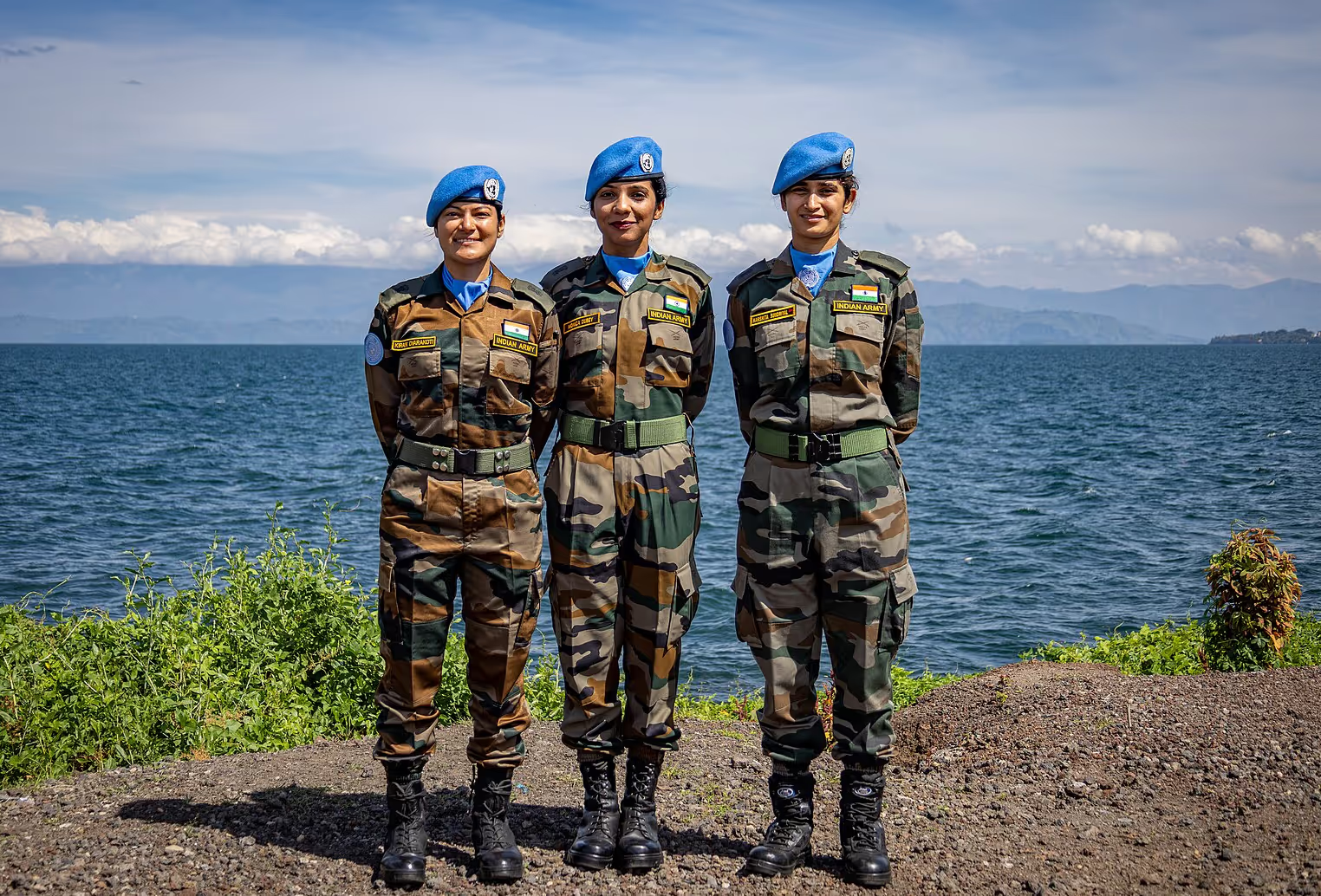
This perception has clear implications for women in peacekeeping and the wider security sector. When gender is framed as separate from operations, the contributions of women are also more likely to be confined to specific roles, such as community liaison or protection-focused functions, rather than being recognised across planning, command, and decision-making spaces. This reinforces long-standing gendered divisions within military components, where women’s presence is valued symbolically or instrumentally, but not consistently linked to operational outcomes or mission success.
Ultimately, the survey points to a persistent gap between policy and practice in peacekeeping. While WPS is widely acknowledged as important, it is not yet embedded as a mandate-driven priority that shapes how military components understand security, protection, and accountability. As long as gender continues to be treated as an add-on - mainly relevant to community engagement - its influence on peacekeeping operations will remain limited, and the transformative potential of women’s participation in the security sector will continue to be constrained. The UN’s ongoing efforts to strengthen the integration of gender perspectives and women’s participation in peacekeeping practice through this type of research is a key component to SecurityWomen's objectives.
To read the full story, see here
January 5, 2026
WPS in Peacekeeping: Gender Perceptions and Gaps in Mandate Integration
January 5, 2026
A recent Women Peace and Security (WPS) Office of Military Affiars (OMA) staff survey shows that while awareness of the WPS agenda is high, gender is still not fully understood as part of core peacekeeping mandates. Instead, WPS is often treated as something that sits alongside “real” operational work, rather than shaping how missions plan, deploy, and operate. Staff largely associate WPS with gender balance in contingents or with engagement with local communities, reinforcing the idea that gender is a social or people-facing issue, rather than a strategic consideration for military effectiveness and mandate delivery.
This perception has clear implications for women in peacekeeping and the wider security sector. When gender is framed as separate from operations, the contributions of women are also more likely to be confined to specific roles, such as community liaison or protection-focused functions, rather than being recognised across planning, command, and decision-making spaces. This reinforces long-standing gendered divisions within military components, where women’s presence is valued symbolically or instrumentally, but not consistently linked to operational outcomes or mission success.
Ultimately, the survey points to a persistent gap between policy and practice in peacekeeping. While WPS is widely acknowledged as important, it is not yet embedded as a mandate-driven priority that shapes how military components understand security, protection, and accountability. As long as gender continues to be treated as an add-on - mainly relevant to community engagement - its influence on peacekeeping operations will remain limited, and the transformative potential of women’s participation in the security sector will continue to be constrained. The UN’s ongoing efforts to strengthen the integration of gender perspectives and women’s participation in peacekeeping practice through this type of research is a key component to SecurityWomen's objectives.
To read the full story, see here
