


UNODC report shows over 18,000 women globally killed in 2023 by intimate partners or family members
December 2, 2024
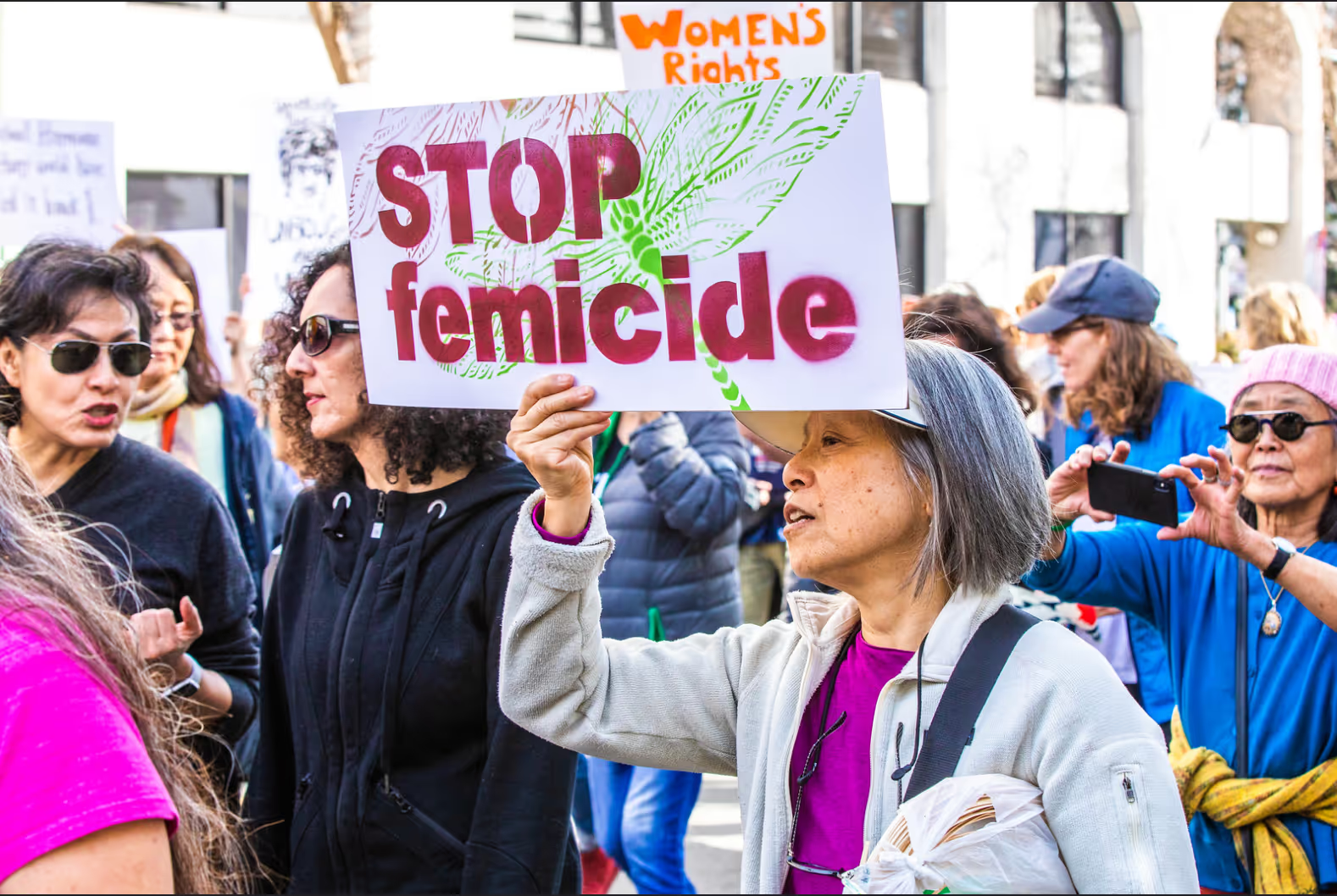
On the occasion of the International Day for the Elimination of Violence Against Women, the United Nations Office on Drugs and Crime (UNODC) released a report highlighting alarming statistics: over 18,000 women globally were killed in 2023 by intimate partners or family members. This means one woman or girl is killed every ten minutes, a stark reminder of the pervasive threat of gender-based violence within domestic settings. The report emphasized that despite some progress in raising awareness, systemic changes remain insufficient to significantly reduce these numbers, underlining the urgent need for coordinated global efforts to prevent such violence and ensure accountability.
The report findings underscore that many femicides could be prevented through timely interventions, such as the implementation of restraining orders and the provision of critical services for survivors. Governments are encouraged to strengthen social protection systems, invest in community-based prevention programs, and promote collaboration between police, social services, healthcare providers, women’s rights organizations, and civil society. This coordinated approach is essential for effectively addressing the root causes of violence and ensuring a comprehensive support system for women at risk.
Addressing these issues also intersects with broader initiatives to promote gender equality in peacekeeping and security institutions. The Elsie Initiative Fund for Uniformed Women in Peace Operations is one such effort, providing targeted support to increase women’s representation in peacekeeping roles. Among the notable case studies, Ghana’s Armed Forces implemented gender-sensitive training programs and introduced policies to ensure equal participation for women in their deployments. Zambia, similarly, made strides by enhancing its recruitment processes to actively include women and providing robust mentorship programs to support their careers. The initiative also funded research in Sri Lanka to identify barriers faced by women in peacekeeping roles, offering actionable recommendations for increasing participation. These examples illustrate how strategic interventions can address systemic barriers while fostering environments that empower women within security structures.
The intersection of gender equality and security reform is a critical frontier in combating violence against women. Greater representation of women in security institutions not only promotes equity but also ensures that gendered perspectives are embedded in policy-making and operational strategies. For instance, the presence of women in peacekeeping has been shown to improve trust and communication with local communities, which is essential for effective violence prevention. By prioritizing initiatives like the Elsie Fund and strengthening global advocacy, the international community can drive systemic change, dismantling the structures that perpetuate violence while empowering women to lead the way in creating safer, more inclusive societies.
To read the UNODC report, see here
To read more on Elsie Fund initiatives, see here
December 2, 2024
UNODC report shows over 18,000 women globally killed in 2023 by intimate partners or family members
December 2, 2024
On the occasion of the International Day for the Elimination of Violence Against Women, the United Nations Office on Drugs and Crime (UNODC) released a report highlighting alarming statistics: over 18,000 women globally were killed in 2023 by intimate partners or family members. This means one woman or girl is killed every ten minutes, a stark reminder of the pervasive threat of gender-based violence within domestic settings. The report emphasized that despite some progress in raising awareness, systemic changes remain insufficient to significantly reduce these numbers, underlining the urgent need for coordinated global efforts to prevent such violence and ensure accountability.
The report findings underscore that many femicides could be prevented through timely interventions, such as the implementation of restraining orders and the provision of critical services for survivors. Governments are encouraged to strengthen social protection systems, invest in community-based prevention programs, and promote collaboration between police, social services, healthcare providers, women’s rights organizations, and civil society. This coordinated approach is essential for effectively addressing the root causes of violence and ensuring a comprehensive support system for women at risk.
Addressing these issues also intersects with broader initiatives to promote gender equality in peacekeeping and security institutions. The Elsie Initiative Fund for Uniformed Women in Peace Operations is one such effort, providing targeted support to increase women’s representation in peacekeeping roles. Among the notable case studies, Ghana’s Armed Forces implemented gender-sensitive training programs and introduced policies to ensure equal participation for women in their deployments. Zambia, similarly, made strides by enhancing its recruitment processes to actively include women and providing robust mentorship programs to support their careers. The initiative also funded research in Sri Lanka to identify barriers faced by women in peacekeeping roles, offering actionable recommendations for increasing participation. These examples illustrate how strategic interventions can address systemic barriers while fostering environments that empower women within security structures.
The intersection of gender equality and security reform is a critical frontier in combating violence against women. Greater representation of women in security institutions not only promotes equity but also ensures that gendered perspectives are embedded in policy-making and operational strategies. For instance, the presence of women in peacekeeping has been shown to improve trust and communication with local communities, which is essential for effective violence prevention. By prioritizing initiatives like the Elsie Fund and strengthening global advocacy, the international community can drive systemic change, dismantling the structures that perpetuate violence while empowering women to lead the way in creating safer, more inclusive societies.
To read the UNODC report, see here
To read more on Elsie Fund initiatives, see here
