


Strengthening Gender Responsive Policing in Balochistan
June 2, 2026
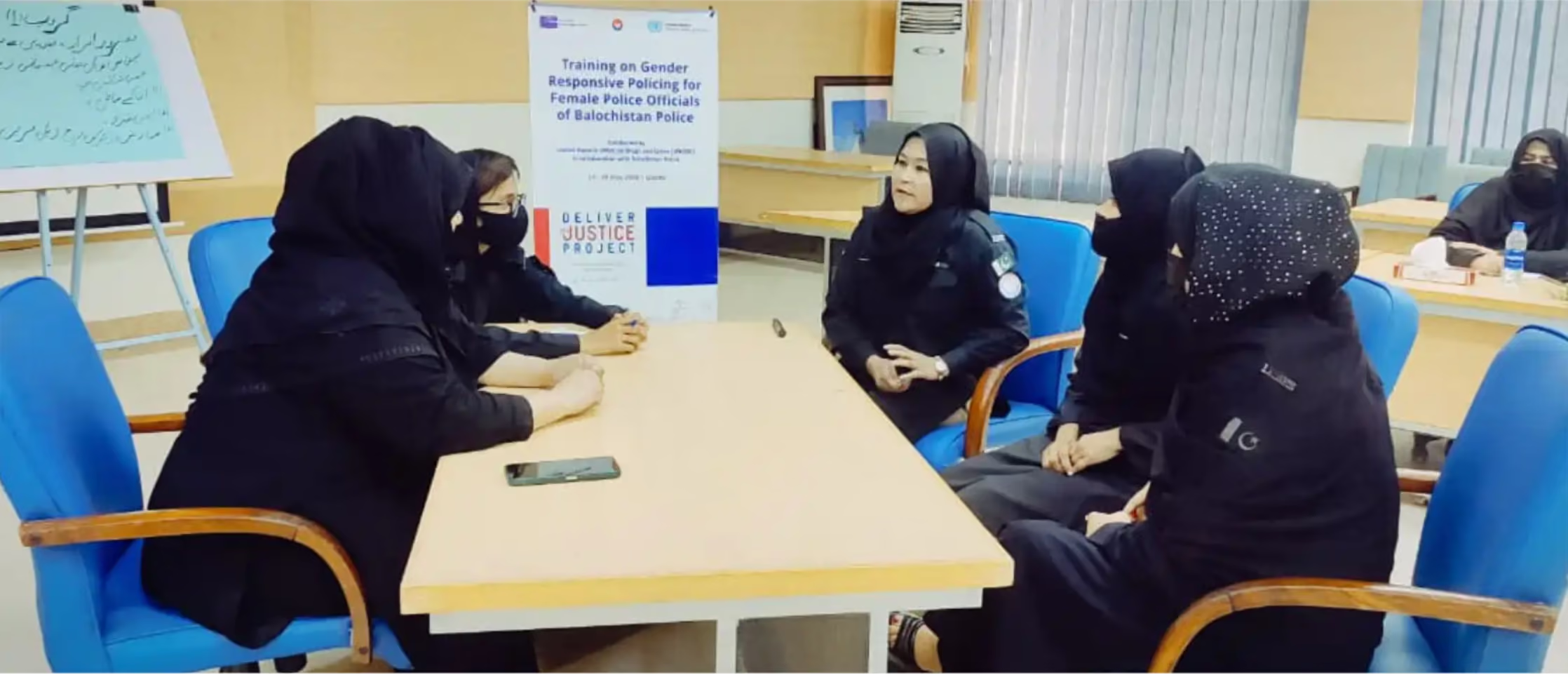
The United Nations Office on Drugs and Crime (UNODC), with support from the European Union’s Deliver Justice Project, has taken a major step toward strengthening women’s roles in law enforcement in Balochistan, Pakistan – where tribal and traditional structures continue to limit women’s mobility, education, and participation in public life, and reinforce male dominance in both household and community decision-making. In February and May 2026, a series of four intensive trainings on Gender Responsive Policing brought together 104 women police officials from 21 districts. The initiative aimed to build institutional capacity and promote victim-centered, inclusive policing practices, equipping participants with the knowledge and skills needed to respond effectively to gender-based violence (GBV) and sexual and gender-based violence (SGBV).
The training emphasized survivor-centered approaches, focusing on empathetic interviewing techniques, ethical case handling, and minimizing re-traumatization during investigations. Participants practiced communication strategies designed to build trust with survivors, while also learning evidence preservation, crime scene management, and the use of forensic tools to strengthen prosecutions. Sessions further addressed emerging challenges such as technology-facilitated violence, highlighting the growing risks posed by online abuse and harassment targeting women and girls. By tackling both traditional and digital forms of violence, the program prepared female officers to respond to evolving threats with professionalism and sensitivity.
Beyond technical skills, the initiative underscored the importance of coordinated response mechanisms and community engagement. Female officers explored integrated referral pathways linking police with healthcare providers, legal aid, psychosocial support, and protection services to ensure survivors receive comprehensive assistance. Training in conflict resolution and mediation further enhanced their ability to foster safer, more inclusive communities. With certificates awarded upon completion, these women now serve in specialized units such as Women Police Stations, Gender Desks, and facilitation centers, where they play a vital role in advancing gender-sensitive policing across Balochistan.
To read the full story, see here
June 2, 2026
Strengthening Gender Responsive Policing in Balochistan
June 2, 2026
The United Nations Office on Drugs and Crime (UNODC), with support from the European Union’s Deliver Justice Project, has taken a major step toward strengthening women’s roles in law enforcement in Balochistan, Pakistan – where tribal and traditional structures continue to limit women’s mobility, education, and participation in public life, and reinforce male dominance in both household and community decision-making. In February and May 2026, a series of four intensive trainings on Gender Responsive Policing brought together 104 women police officials from 21 districts. The initiative aimed to build institutional capacity and promote victim-centered, inclusive policing practices, equipping participants with the knowledge and skills needed to respond effectively to gender-based violence (GBV) and sexual and gender-based violence (SGBV).
The training emphasized survivor-centered approaches, focusing on empathetic interviewing techniques, ethical case handling, and minimizing re-traumatization during investigations. Participants practiced communication strategies designed to build trust with survivors, while also learning evidence preservation, crime scene management, and the use of forensic tools to strengthen prosecutions. Sessions further addressed emerging challenges such as technology-facilitated violence, highlighting the growing risks posed by online abuse and harassment targeting women and girls. By tackling both traditional and digital forms of violence, the program prepared female officers to respond to evolving threats with professionalism and sensitivity.
Beyond technical skills, the initiative underscored the importance of coordinated response mechanisms and community engagement. Female officers explored integrated referral pathways linking police with healthcare providers, legal aid, psychosocial support, and protection services to ensure survivors receive comprehensive assistance. Training in conflict resolution and mediation further enhanced their ability to foster safer, more inclusive communities. With certificates awarded upon completion, these women now serve in specialized units such as Women Police Stations, Gender Desks, and facilitation centers, where they play a vital role in advancing gender-sensitive policing across Balochistan.
To read the full story, see here
