


SecurityWomen Attends the European Regional Workshop on Non-Governmental Stakeholders’ Engagement in Practical Application of the UN Convention against Transnational Organised Crime
December 1, 2025
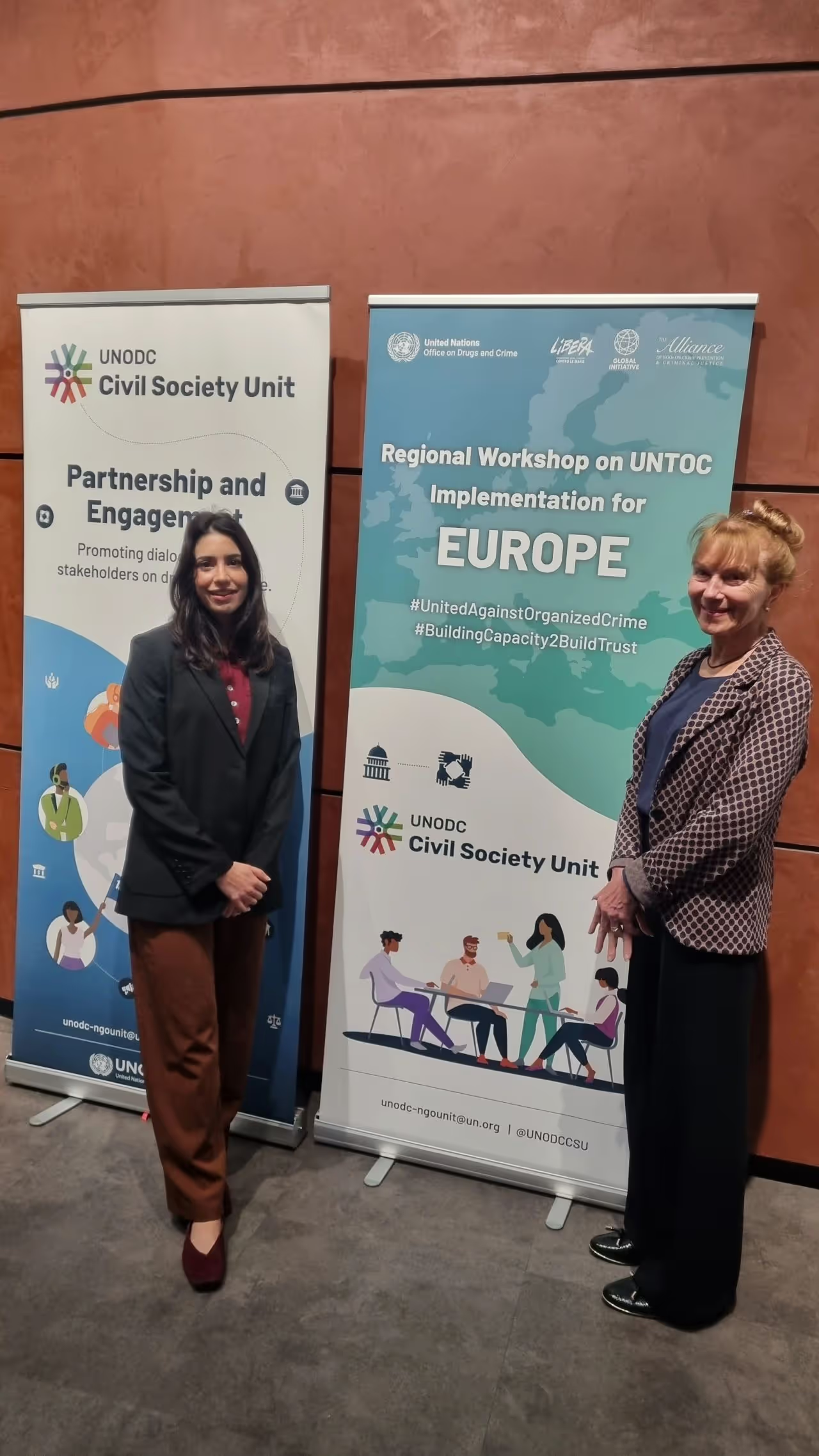
SecurityWomens’ Chairperson Barbara Cleary and Research Associate Laura-Jane Watkins represented SecurityWomen at the European Regional Workshop on Non-Governmental Stakeholders' Engagement in Practical Application of the UN Convention against Transnational Organised Crime, held in Rome from 19–21 November 2025.
Addressing Evolving Criminal Threats in Europe
The regional workshop brought together civil society, academia, and private sector stakeholders across Europe and the United Kingdom to strengthen their capacity and engagement in tackling transnational organised crime and implementing the UN Convention against Transnational Organised Crime (UNTOC), also known as the Palermo Convention. This year marks the 25th anniversary of UNTOC and its three Protocols, reinforcing their continued relevance as the primary international legal instrument for preventing and addressing transnational organised crime.
As organised criminal groups become increasingly sophisticated, collective action has never been more vital. The workshop, convened by UNODC in partnership with Libera Associazioni Nomi e Numeri Contro le Mafie, the Global Initiative against Transnational Organised Crime, and the Alliance of NGOs on Crime Prevention and Criminal Justice, brought together more than 40 experts (including INTERPOL, EUROPOL, UNICRI and UNODC/UNTOC) from 14 countries under the #ExtraLibera initiative to tackle pressing challenges in Europe's fight against organised crime.
Key Areas of Focus
Participants, including SecurityWomen's delegation, engaged in dynamic, solution-oriented discussions on five critical fronts:
- Child exploitation and trafficking for criminal purposes
- Corruption, hybrid threats, and high-risk criminal networks
- Cyber-enabled organised crime and AI-driven threats
- Asset recovery and social reuse of confiscated assets
- Youth recruitment and prevention strategies
Collaborative Solutions and Commitments
The workshop yielded concrete proposals to strengthen Europe's collective resilience and cooperation:
- Intergenerational capacity building and knowledge sharing
- Cross-sectoral public education and awareness campaigns
- Educational frameworks addressing cybercrime and AI-driven threats
- Advocacy for compulsory social reuse of confiscated assets and transparency mechanisms
- A whole-of-society approach to protect youth at risk
- Building Inclusive Partnerships Against Organised Crime.
Building Inclusive Partnerships Against Transnational Organised Crime: Positioning the UNSCR 1325 Agenda
A significant outcome of the workshop was the establishment of a Civil Society Regional Network for Europe (NET4U) — joining similar networks in the Americas, Africa, and Asia. This network will coordinate and amplify the contributions of non-governmental stakeholders to implementing the UN Convention against Transnational Organised Crime (UNTOC) and strengthening the fight against organised crime across European borders.
SecurityWomen remains committed to building inclusive partnerships at a multilateral level, ensuring that women’s meaningful participation remains central to multilateral efforts against organised crime. To this end, focusing TOC response on gender equality and human rights, does not simply mean “adding women to efforts that have been about men,” but rather advocating for Member States to ensure the principles of fairness, equality and non-discrimination, underpin the policies and legislation which govern tactical and operational responses across UNTOC’s “4P” (Prevention, Protection, Prosecution andPartnership) framework and its additional Protocols.
SecurityWomen is currently considering its future engagement with the newly established Civil Society Regional Network for Europe (NET4U) and looks forward to contributing to its work. SecurityWomen is also pleased to announce its upcoming participation in the 15th UNCrime Congress, in Abu Dhabi in April 2026, to advance the multilateral dialogue on women’s inclusive and meaningful participation in combatting all forms of transnational organised crime.
For more information about SecurityWomen's work in security and organised crime prevention, follow our events page link, to view our parallel side-events hosted at the 33rd and 34th UNOV/UNODC Commission on Crime Prevention and Criminal Justice.
Sources:
1. Issue Paper: Organised Crime and Gender – Issues relating to the United NationsConvention against Transnational Organised Crime (Vienna, 2022) pp. 8-13.
2. Toolkit On Mainstreaming Gender and Human Rights, In the Implementation of the UnitedNations Convention Against Transnational Organised Crime (Vienna, 2023).
3. United Nations Convention Against Transnational Organised Crime and The Protocols Thereto (UNGA/2000, RES 55/25)
December 1, 2025
SecurityWomen Attends the European Regional Workshop on Non-Governmental Stakeholders’ Engagement in Practical Application of the UN Convention against Transnational Organised Crime
December 1, 2025
SecurityWomens’ Chairperson Barbara Cleary and Research Associate Laura-Jane Watkins represented SecurityWomen at the European Regional Workshop on Non-Governmental Stakeholders' Engagement in Practical Application of the UN Convention against Transnational Organised Crime, held in Rome from 19–21 November 2025.
Addressing Evolving Criminal Threats in Europe
The regional workshop brought together civil society, academia, and private sector stakeholders across Europe and the United Kingdom to strengthen their capacity and engagement in tackling transnational organised crime and implementing the UN Convention against Transnational Organised Crime (UNTOC), also known as the Palermo Convention. This year marks the 25th anniversary of UNTOC and its three Protocols, reinforcing their continued relevance as the primary international legal instrument for preventing and addressing transnational organised crime.
As organised criminal groups become increasingly sophisticated, collective action has never been more vital. The workshop, convened by UNODC in partnership with Libera Associazioni Nomi e Numeri Contro le Mafie, the Global Initiative against Transnational Organised Crime, and the Alliance of NGOs on Crime Prevention and Criminal Justice, brought together more than 40 experts (including INTERPOL, EUROPOL, UNICRI and UNODC/UNTOC) from 14 countries under the #ExtraLibera initiative to tackle pressing challenges in Europe's fight against organised crime.
Key Areas of Focus
Participants, including SecurityWomen's delegation, engaged in dynamic, solution-oriented discussions on five critical fronts:
- Child exploitation and trafficking for criminal purposes
- Corruption, hybrid threats, and high-risk criminal networks
- Cyber-enabled organised crime and AI-driven threats
- Asset recovery and social reuse of confiscated assets
- Youth recruitment and prevention strategies
Collaborative Solutions and Commitments
The workshop yielded concrete proposals to strengthen Europe's collective resilience and cooperation:
- Intergenerational capacity building and knowledge sharing
- Cross-sectoral public education and awareness campaigns
- Educational frameworks addressing cybercrime and AI-driven threats
- Advocacy for compulsory social reuse of confiscated assets and transparency mechanisms
- A whole-of-society approach to protect youth at risk
- Building Inclusive Partnerships Against Organised Crime.
Building Inclusive Partnerships Against Transnational Organised Crime: Positioning the UNSCR 1325 Agenda
A significant outcome of the workshop was the establishment of a Civil Society Regional Network for Europe (NET4U) — joining similar networks in the Americas, Africa, and Asia. This network will coordinate and amplify the contributions of non-governmental stakeholders to implementing the UN Convention against Transnational Organised Crime (UNTOC) and strengthening the fight against organised crime across European borders.
SecurityWomen remains committed to building inclusive partnerships at a multilateral level, ensuring that women’s meaningful participation remains central to multilateral efforts against organised crime. To this end, focusing TOC response on gender equality and human rights, does not simply mean “adding women to efforts that have been about men,” but rather advocating for Member States to ensure the principles of fairness, equality and non-discrimination, underpin the policies and legislation which govern tactical and operational responses across UNTOC’s “4P” (Prevention, Protection, Prosecution andPartnership) framework and its additional Protocols.
SecurityWomen is currently considering its future engagement with the newly established Civil Society Regional Network for Europe (NET4U) and looks forward to contributing to its work. SecurityWomen is also pleased to announce its upcoming participation in the 15th UNCrime Congress, in Abu Dhabi in April 2026, to advance the multilateral dialogue on women’s inclusive and meaningful participation in combatting all forms of transnational organised crime.
For more information about SecurityWomen's work in security and organised crime prevention, follow our events page link, to view our parallel side-events hosted at the 33rd and 34th UNOV/UNODC Commission on Crime Prevention and Criminal Justice.
Sources:
1. Issue Paper: Organised Crime and Gender – Issues relating to the United NationsConvention against Transnational Organised Crime (Vienna, 2022) pp. 8-13.
2. Toolkit On Mainstreaming Gender and Human Rights, In the Implementation of the UnitedNations Convention Against Transnational Organised Crime (Vienna, 2023).
3. United Nations Convention Against Transnational Organised Crime and The Protocols Thereto (UNGA/2000, RES 55/25)
