


Latin American Security and Defence Network (RESDAL) Presents the first interregional study on responses to Sexual Harassment and Abuse in Defence Institutions across 20 countries of the Global South
July 14, 2026
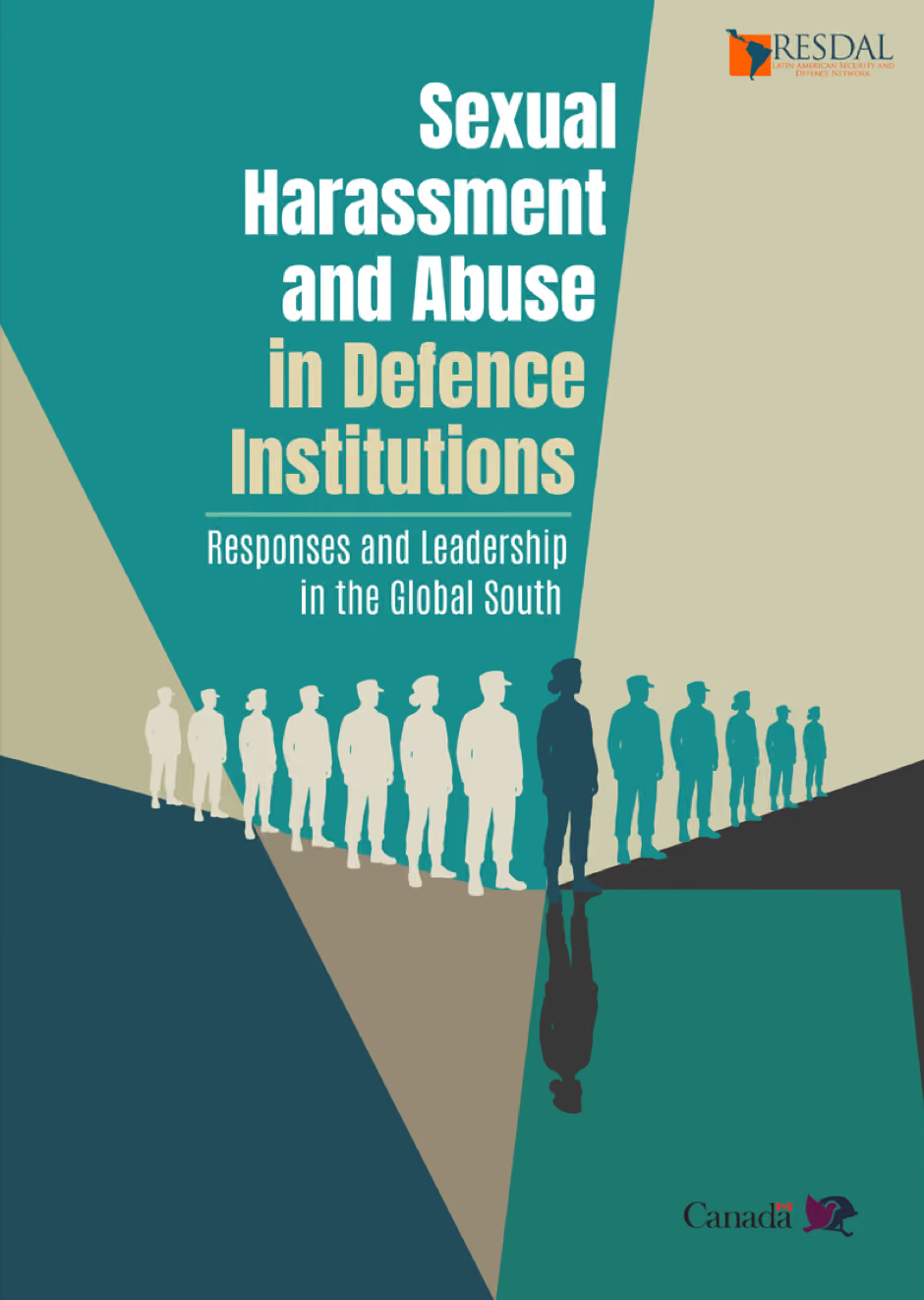
The Latin American Security and Defence Network (RESDAL) has launched Sexual Harassment and Abuse in Defence Institutions: Responses and Leadership in the Global South, a comprehensive study examining how defence institutions across twenty countries are addressing sexual harassment and abuse. Conducted over nearly three years, the research analysed legislation, policies, protocols, and institutional practices in countries spanning Latin America, Africa, Asia, and the Middle East. The initiative aims to elevate the issue on national and regional defence agendas while encouraging stronger institutional responses.
Prepared with the participation of regional and national contributors from the four regions studied, the report was supported by Global Affairs Canada through the Elsie Initiative. According to co-author Cecilia Mazzotta, the findings demonstrate that countries in the Global South have valuable experiences and lessons to share. The study highlights examples of criminal law reforms, institutional protocols, and leadership initiatives that are already delivering tangible results in addressing sexual harassment and abuse within defence institutions.
The report found that three out of four countries analysed now recognize sexual harassment as a standalone criminal offense in their criminal codes, with most legislative reforms taking place between 2010 and 2025. It also identifies a growing trend within defence sectors toward the adoption of dedicated reporting protocols and codes of ethics for armed forces personnel. Based on these findings, the study recommends strengthening confidence in reporting systems, shifting from an “obligation to report” model to an obligation of institutional response, and increasing South-South cooperation to promote the exchange of successful practices and lessons learned across regions.
To download the report, see here
July 14, 2026
Latin American Security and Defence Network (RESDAL) Presents the first interregional study on responses to Sexual Harassment and Abuse in Defence Institutions across 20 countries of the Global South
July 14, 2026
The Latin American Security and Defence Network (RESDAL) has launched Sexual Harassment and Abuse in Defence Institutions: Responses and Leadership in the Global South, a comprehensive study examining how defence institutions across twenty countries are addressing sexual harassment and abuse. Conducted over nearly three years, the research analysed legislation, policies, protocols, and institutional practices in countries spanning Latin America, Africa, Asia, and the Middle East. The initiative aims to elevate the issue on national and regional defence agendas while encouraging stronger institutional responses.
Prepared with the participation of regional and national contributors from the four regions studied, the report was supported by Global Affairs Canada through the Elsie Initiative. According to co-author Cecilia Mazzotta, the findings demonstrate that countries in the Global South have valuable experiences and lessons to share. The study highlights examples of criminal law reforms, institutional protocols, and leadership initiatives that are already delivering tangible results in addressing sexual harassment and abuse within defence institutions.
The report found that three out of four countries analysed now recognize sexual harassment as a standalone criminal offense in their criminal codes, with most legislative reforms taking place between 2010 and 2025. It also identifies a growing trend within defence sectors toward the adoption of dedicated reporting protocols and codes of ethics for armed forces personnel. Based on these findings, the study recommends strengthening confidence in reporting systems, shifting from an “obligation to report” model to an obligation of institutional response, and increasing South-South cooperation to promote the exchange of successful practices and lessons learned across regions.
To download the report, see here
