


Learning from Sweden’s experience for more gender-equal police structures in Bosnia and Herzegovina and Serbia and the region
July 14, 2026
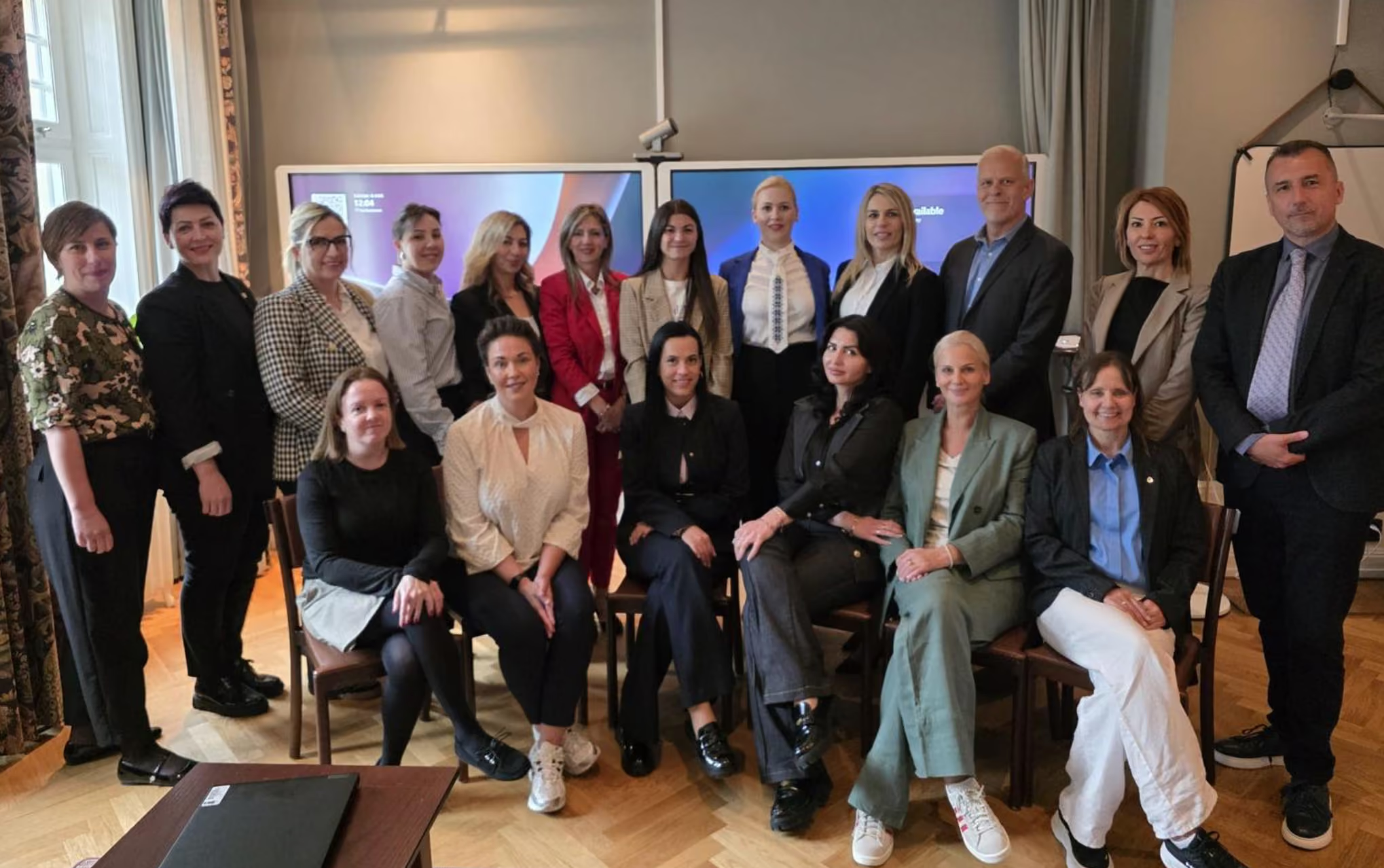
Representatives of women police officers’ associations from Bosnia and Herzegovina and Serbia recently visited Stockholm to exchange experiences with the Swedish Police Authority on advancing gender equality within police institutions. The study visit brought together members of the Association “Network of Women Police Officers” and the Women’s Network of the Ministry of Interior of Republika Srpska, alongside representatives of the Ministry of Security of Bosnia and Herzegovina, the Women Police Officers Network of the Republic of Serbia, and UNDP offices in both countries. The programme focused on practical approaches to recruiting and retaining women in policing, career development, mentoring, leadership training, and the prevention of discrimination.
During the visit, participants examined how the Swedish Police Authority has integrated gender equality into its management, planning, decision-making and daily operations rather than treating it as a separate initiative. Discussions highlighted the importance of systematic data collection, transparent recruitment and promotion processes, leadership development and management accountability in creating inclusive workplaces. According to Lejla Džinović of the Association “Network of Women Police Officers,” Sweden’s experience demonstrates that advancing gender equality requires continuous investment, institutional commitment and cooperation. The Swedish police also shared the results of long-term reforms, which have helped women account for approximately 48 percent of all employees, 38 percent of police officers and 41 percent of management positions.
The participants jointly developed recommendations to support future reform efforts in Bosnia and Herzegovina and Serbia, including stronger recruitment campaigns targeting women, greater visibility for successful women police officers, structured mentoring and leadership programmes, improved staff retention measures and regular collection of gender-disaggregated data. Ljiljana Đurić of the Women’s Network of the Ministry of Interior of Republika Srpska emphasized the need to strengthen legislation, institutional action and public awareness, while Police Colonel Katarina Tomašević noted that lasting progress depends on systemic change, sustained investment and leadership support. The visit further strengthened cooperation between the participating organizations, the Swedish Police Authority and UNDP, reinforcing a shared commitment to building more inclusive police services through long-term institutional engagement and equal opportunities for women and men.
To read the full story, see here
July 14, 2026
Learning from Sweden’s experience for more gender-equal police structures in Bosnia and Herzegovina and Serbia and the region
July 14, 2026
Representatives of women police officers’ associations from Bosnia and Herzegovina and Serbia recently visited Stockholm to exchange experiences with the Swedish Police Authority on advancing gender equality within police institutions. The study visit brought together members of the Association “Network of Women Police Officers” and the Women’s Network of the Ministry of Interior of Republika Srpska, alongside representatives of the Ministry of Security of Bosnia and Herzegovina, the Women Police Officers Network of the Republic of Serbia, and UNDP offices in both countries. The programme focused on practical approaches to recruiting and retaining women in policing, career development, mentoring, leadership training, and the prevention of discrimination.
During the visit, participants examined how the Swedish Police Authority has integrated gender equality into its management, planning, decision-making and daily operations rather than treating it as a separate initiative. Discussions highlighted the importance of systematic data collection, transparent recruitment and promotion processes, leadership development and management accountability in creating inclusive workplaces. According to Lejla Džinović of the Association “Network of Women Police Officers,” Sweden’s experience demonstrates that advancing gender equality requires continuous investment, institutional commitment and cooperation. The Swedish police also shared the results of long-term reforms, which have helped women account for approximately 48 percent of all employees, 38 percent of police officers and 41 percent of management positions.
The participants jointly developed recommendations to support future reform efforts in Bosnia and Herzegovina and Serbia, including stronger recruitment campaigns targeting women, greater visibility for successful women police officers, structured mentoring and leadership programmes, improved staff retention measures and regular collection of gender-disaggregated data. Ljiljana Đurić of the Women’s Network of the Ministry of Interior of Republika Srpska emphasized the need to strengthen legislation, institutional action and public awareness, while Police Colonel Katarina Tomašević noted that lasting progress depends on systemic change, sustained investment and leadership support. The visit further strengthened cooperation between the participating organizations, the Swedish Police Authority and UNDP, reinforcing a shared commitment to building more inclusive police services through long-term institutional engagement and equal opportunities for women and men.
To read the full story, see here
