


Security decisions - still a men’s club?
July 22, 2026
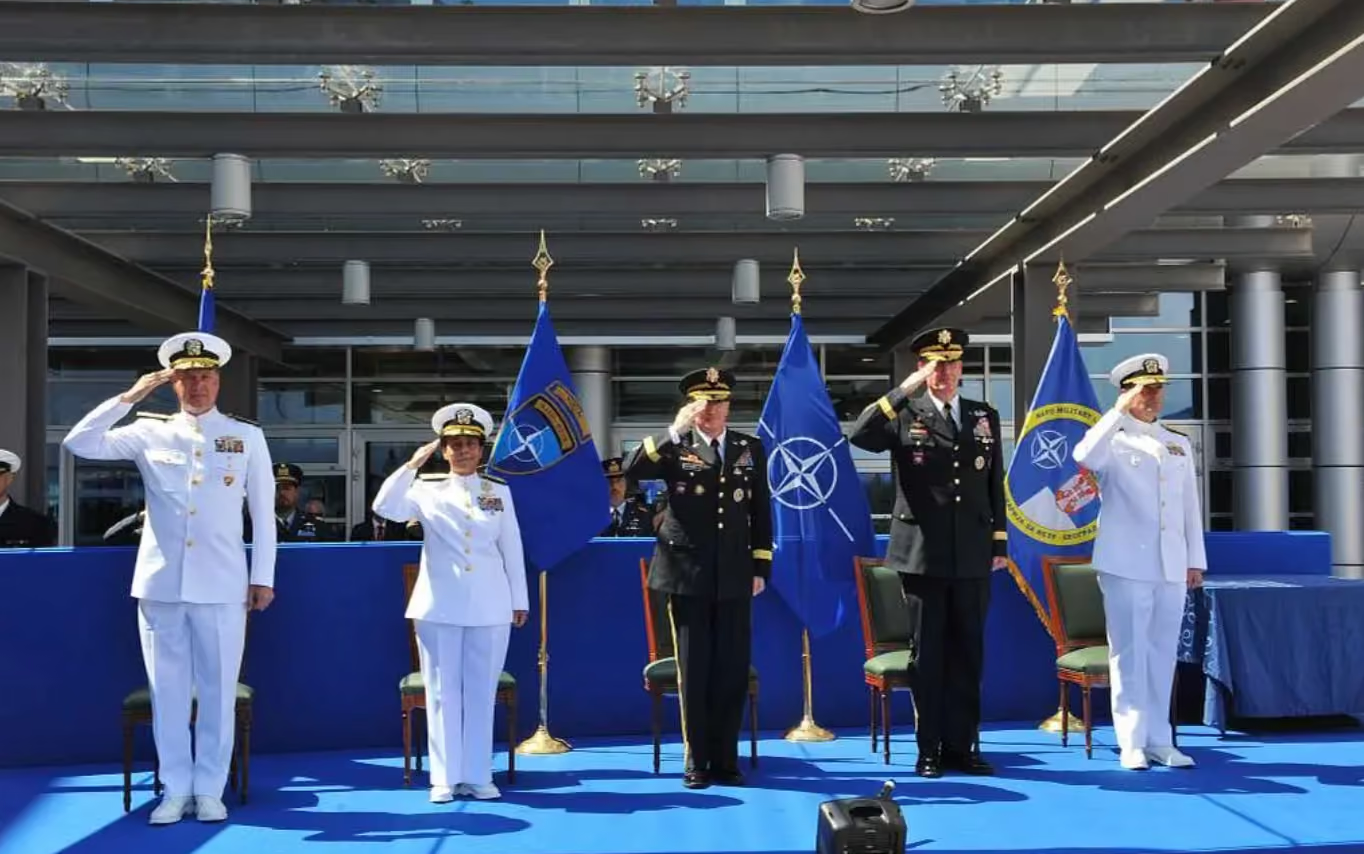
While security threats are evolving rapidly, women's meaningful participation in the security sector remains a challenge.
❗ 6 of 32 - Permanent representatives to NATO’s North Atlantic Council are women
❗ 0 of 32 - Women currently make up NATO’s Military permanent representatives
❗ 0 - Women have served as NATO Secretary General in the Alliance's history
❗ 20% - Women in NATO civilian leadership posts in 2024
When decision-making tables stay homogeneous, perspectives are lost. At a time of geopolitical upheaval, Europe cannot afford blind spots.
As Diana Morais, former Chair NATO Committee on gender perspectives and women, peace and security expert says:
“Europe cannot afford narrow decision-making in an age of war. It weakens our security by narrowing what we see, who we listen to, the talent we mobilise and the options we consider. Under today’s threats — from military aggression and cyberattacks to disinformation and hybrid warfare — people are affected differently and respond differently depending on their roles, vulnerabilities, access to information, levels of trust, mobility, digital exposure and responsibilities within families and communities. If we fail to understand those differences, we fail to understand the operating environment."
To read more, see here
July 22, 2026
Security decisions - still a men’s club?
July 22, 2026
While security threats are evolving rapidly, women's meaningful participation in the security sector remains a challenge.
❗ 6 of 32 - Permanent representatives to NATO’s North Atlantic Council are women
❗ 0 of 32 - Women currently make up NATO’s Military permanent representatives
❗ 0 - Women have served as NATO Secretary General in the Alliance's history
❗ 20% - Women in NATO civilian leadership posts in 2024
When decision-making tables stay homogeneous, perspectives are lost. At a time of geopolitical upheaval, Europe cannot afford blind spots.
As Diana Morais, former Chair NATO Committee on gender perspectives and women, peace and security expert says:
“Europe cannot afford narrow decision-making in an age of war. It weakens our security by narrowing what we see, who we listen to, the talent we mobilise and the options we consider. Under today’s threats — from military aggression and cyberattacks to disinformation and hybrid warfare — people are affected differently and respond differently depending on their roles, vulnerabilities, access to information, levels of trust, mobility, digital exposure and responsibilities within families and communities. If we fail to understand those differences, we fail to understand the operating environment."
To read more, see here
