


NEW REPORT Holding the Line on Women, Peace and Security: Navigating Pushback and Backsliding in a Time of Global Conflicts,
September 22, 2026
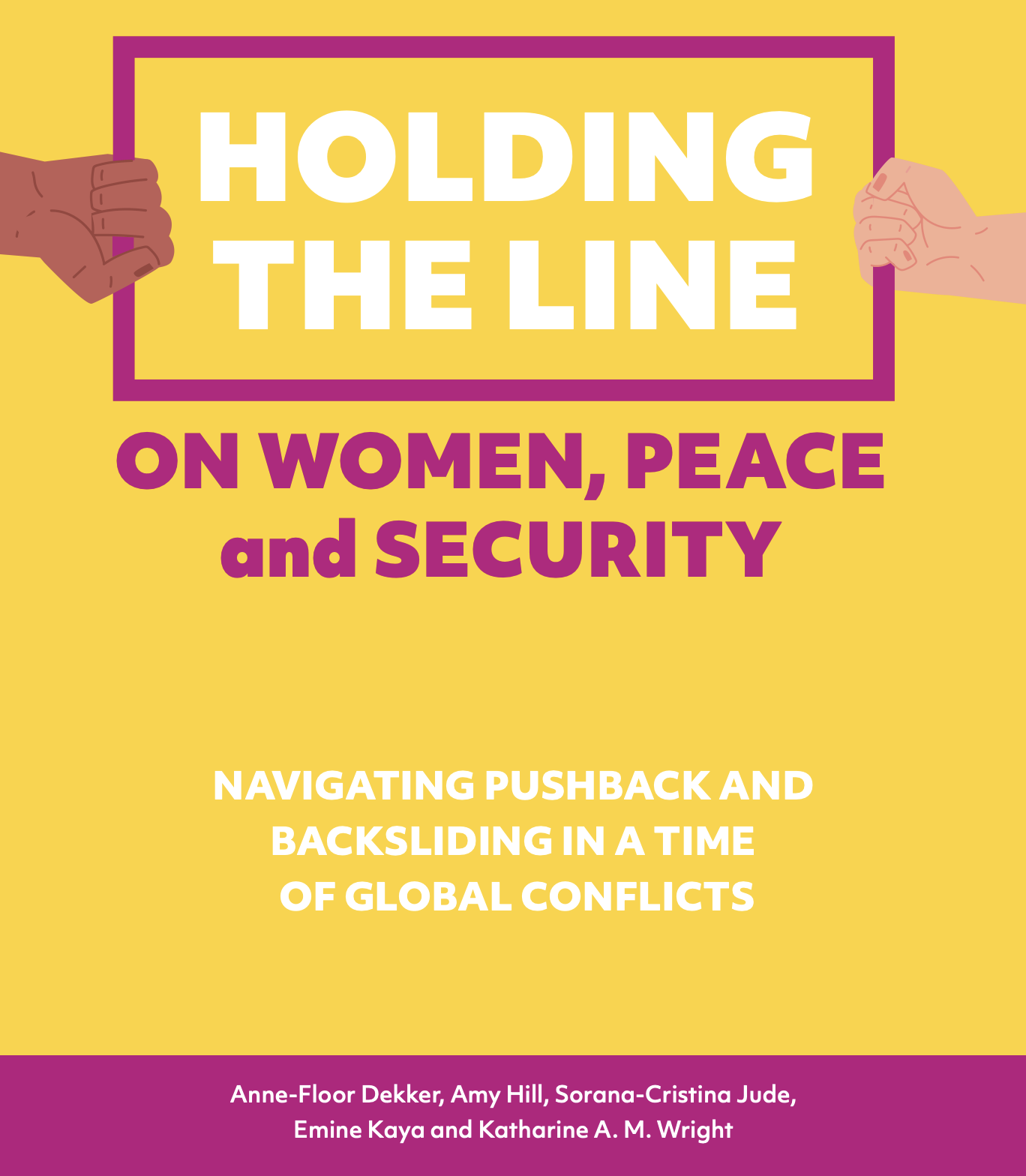
A new report, Holding the Line on Women, Peace and Security: Navigating Pushback and Backsliding in a Time of Global Conflicts, has sounded the alarm on growing threats to the global Women, Peace and Security (WPS) agenda. Published by Anne-Floor Dekker, Amy Hill, Sorana-Cristina Jude, Emine Kaya and Katharine A. M. Wright, the report comes as the international community marks the 25th anniversary of UN Security Council Resolution 1325, the landmark framework that advanced women’s participation in peace and security decision-making. Rather than celebrating progress, the authors warn that women’s rights and gender equality are facing increasing pressure from conflict, democratic backsliding, funding cuts and organised anti-gender movements.
Drawing on discussions among policymakers, military leaders, academics and civil society representatives, the report argues that Women, Peace and Security is not a peripheral issue but a critical component of effective security, resilience and peacebuilding. It highlights the realities facing millions of women and girls affected by war, from Ukraine and Sudan to Gaza and Afghanistan, where conflict, displacement, gender-based violence and shrinking civic spaces continue to undermine their rights and opportunities. The report also points to worrying signs of backsliding within security institutions, including reduced visibility of WPS initiatives, declining funding and the growing influence of narratives that seek to sideline gender equality from defence and security policies.
Importantly, Holding the Line is more than a warning. It serves as a practical guide for governments, security institutions and civil society organizations seeking to protect and advance women's leadership in peace and security. The report outlines strategies for recognizing early signs of resistance, strengthening communication around women's rights, building new alliances across sectors and reinforcing resilience in the face of political and ideological pushback. Its central message is clear: at a time of intensifying global insecurity, investing in women’s meaningful participation is not optional. It is essential for building credible institutions, strengthening democratic values and achieving sustainable peace.
To read the full report, see here
September 22, 2026
NEW REPORT Holding the Line on Women, Peace and Security: Navigating Pushback and Backsliding in a Time of Global Conflicts,
September 22, 2026
A new report, Holding the Line on Women, Peace and Security: Navigating Pushback and Backsliding in a Time of Global Conflicts, has sounded the alarm on growing threats to the global Women, Peace and Security (WPS) agenda. Published by Anne-Floor Dekker, Amy Hill, Sorana-Cristina Jude, Emine Kaya and Katharine A. M. Wright, the report comes as the international community marks the 25th anniversary of UN Security Council Resolution 1325, the landmark framework that advanced women’s participation in peace and security decision-making. Rather than celebrating progress, the authors warn that women’s rights and gender equality are facing increasing pressure from conflict, democratic backsliding, funding cuts and organised anti-gender movements.
Drawing on discussions among policymakers, military leaders, academics and civil society representatives, the report argues that Women, Peace and Security is not a peripheral issue but a critical component of effective security, resilience and peacebuilding. It highlights the realities facing millions of women and girls affected by war, from Ukraine and Sudan to Gaza and Afghanistan, where conflict, displacement, gender-based violence and shrinking civic spaces continue to undermine their rights and opportunities. The report also points to worrying signs of backsliding within security institutions, including reduced visibility of WPS initiatives, declining funding and the growing influence of narratives that seek to sideline gender equality from defence and security policies.
Importantly, Holding the Line is more than a warning. It serves as a practical guide for governments, security institutions and civil society organizations seeking to protect and advance women's leadership in peace and security. The report outlines strategies for recognizing early signs of resistance, strengthening communication around women's rights, building new alliances across sectors and reinforcing resilience in the face of political and ideological pushback. Its central message is clear: at a time of intensifying global insecurity, investing in women’s meaningful participation is not optional. It is essential for building credible institutions, strengthening democratic values and achieving sustainable peace.
To read the full report, see here
