


New UK Women Peace and Security National Action Plan for 2023-2027
March 19, 2023
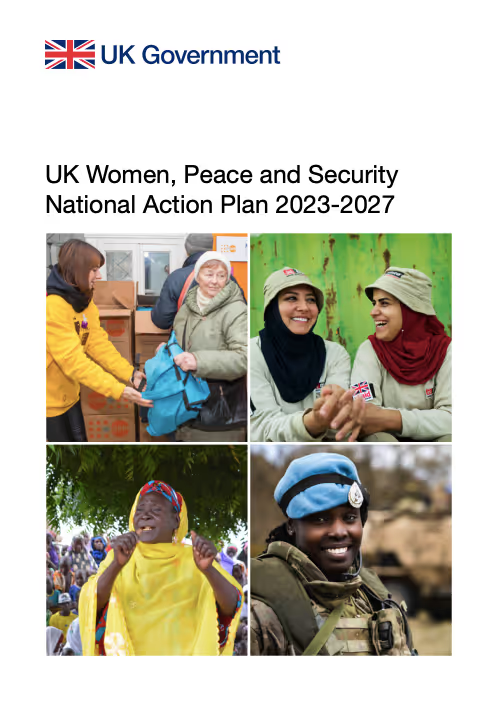
At the end of February, the UK government launched their fifth National Action Plan for Women Peace and Security (WPS). They have taken the opportunity to refine the UK’s approach to WPS. setting a strategic direction and responding to the changing nature of conflict. The NAP is jointly owned by the Foreign Commonwealth and Development Office (FCDO) and the Ministry of Defence (MOD) and for the first time includes input from the Home Office and the Ministry of Justice and Northern Ireland Office.
The new National Action Plan includes several key changes from the previous iterations:
- adoption of a broader approach to transnational threats beyond preventing and countering violent extremism, to include new technologies and use of digital spaces by belligerent actors, proliferation of weapons and climate insecurity
- insights on the UK’s domestic approach to the WPS agenda recognising that foreign and domestic policy do not operate in isolation
- provision of an improved framework for monitoring and evaluation throughout the duration of the NAP including more specific indicators
- strengthens the capabilities offer for UK government officials, building an international network of expertise
- heightened accountability, especially at senior levels, for the NAP through better governance structures and external transparency mechanisms
- clearer expectations and support for focus countries and a more flexible approach, recognising the dynamic nature of peace and security - Ethiopia, Yemen, Ukraine have been added to the existing countries of focus as well.
The NAP will deliver against the four pillars of the WPS agenda; prevention, protection, participation, and relief and recovery. The updated strategic objectives go across all four pillars and reflect the UK Government priorities and way of working:
- Decision-making: Increasing women’s meaningful participation, leadership and representation in decision-making processes.
- Gender-based violence: Preventing gender-based violence, including conflict-related sexual violence, and supporting survivors to cope, recover and seek justice.
- Humanitarian and crisis response: Supporting the needs of women and girls in crises and ensuring they can participate and lead in responses.
- Security and justice: Increasing the accountability of security and justice actors to women and girls and ensuring they are responsive to their rights and needs.
- Transnational threats: Ensuring an effective Government response to the needs of women and girls as part of our approach to transnational threats.
To celebrate the launch, the FDCO held an event led by the Foreign Secretary who reaffirmed the Government's commitment to promoting the WPS agenda and underlined that implementation of the new NAP needed to be focused on empowering women rather than just protecting them. The Minister for Armed Forces and Veterans (MOD) announced their new objective embodied in the NAP that 30% of new recruits into the armed forces should be women. The authors of the NAP who were also present emphasised the importance of domestic consistency on WPS, which is a key contributor to legitimacy when operating elsewhere and clearly needed in the UK’s security sector. Finally, commentators on the NAP underscored particular areas of UK domestic law that needed attention, namely the government’s treatment of migrant women and arms deals which fuel violence against women around the world. The new NAP and the supporting policy is welcome but like all new initiatives the real test will be the extent to which it is successfully implemented, and where.
Read the new NAP here
March 19, 2023
New UK Women Peace and Security National Action Plan for 2023-2027
March 19, 2023
At the end of February, the UK government launched their fifth National Action Plan for Women Peace and Security (WPS). They have taken the opportunity to refine the UK’s approach to WPS. setting a strategic direction and responding to the changing nature of conflict. The NAP is jointly owned by the Foreign Commonwealth and Development Office (FCDO) and the Ministry of Defence (MOD) and for the first time includes input from the Home Office and the Ministry of Justice and Northern Ireland Office.
The new National Action Plan includes several key changes from the previous iterations:
- adoption of a broader approach to transnational threats beyond preventing and countering violent extremism, to include new technologies and use of digital spaces by belligerent actors, proliferation of weapons and climate insecurity
- insights on the UK’s domestic approach to the WPS agenda recognising that foreign and domestic policy do not operate in isolation
- provision of an improved framework for monitoring and evaluation throughout the duration of the NAP including more specific indicators
- strengthens the capabilities offer for UK government officials, building an international network of expertise
- heightened accountability, especially at senior levels, for the NAP through better governance structures and external transparency mechanisms
- clearer expectations and support for focus countries and a more flexible approach, recognising the dynamic nature of peace and security - Ethiopia, Yemen, Ukraine have been added to the existing countries of focus as well.
The NAP will deliver against the four pillars of the WPS agenda; prevention, protection, participation, and relief and recovery. The updated strategic objectives go across all four pillars and reflect the UK Government priorities and way of working:
- Decision-making: Increasing women’s meaningful participation, leadership and representation in decision-making processes.
- Gender-based violence: Preventing gender-based violence, including conflict-related sexual violence, and supporting survivors to cope, recover and seek justice.
- Humanitarian and crisis response: Supporting the needs of women and girls in crises and ensuring they can participate and lead in responses.
- Security and justice: Increasing the accountability of security and justice actors to women and girls and ensuring they are responsive to their rights and needs.
- Transnational threats: Ensuring an effective Government response to the needs of women and girls as part of our approach to transnational threats.
To celebrate the launch, the FDCO held an event led by the Foreign Secretary who reaffirmed the Government's commitment to promoting the WPS agenda and underlined that implementation of the new NAP needed to be focused on empowering women rather than just protecting them. The Minister for Armed Forces and Veterans (MOD) announced their new objective embodied in the NAP that 30% of new recruits into the armed forces should be women. The authors of the NAP who were also present emphasised the importance of domestic consistency on WPS, which is a key contributor to legitimacy when operating elsewhere and clearly needed in the UK’s security sector. Finally, commentators on the NAP underscored particular areas of UK domestic law that needed attention, namely the government’s treatment of migrant women and arms deals which fuel violence against women around the world. The new NAP and the supporting policy is welcome but like all new initiatives the real test will be the extent to which it is successfully implemented, and where.
Read the new NAP here
