


Thailand hosts regional workshop on community-oriented policing
May 15, 2024
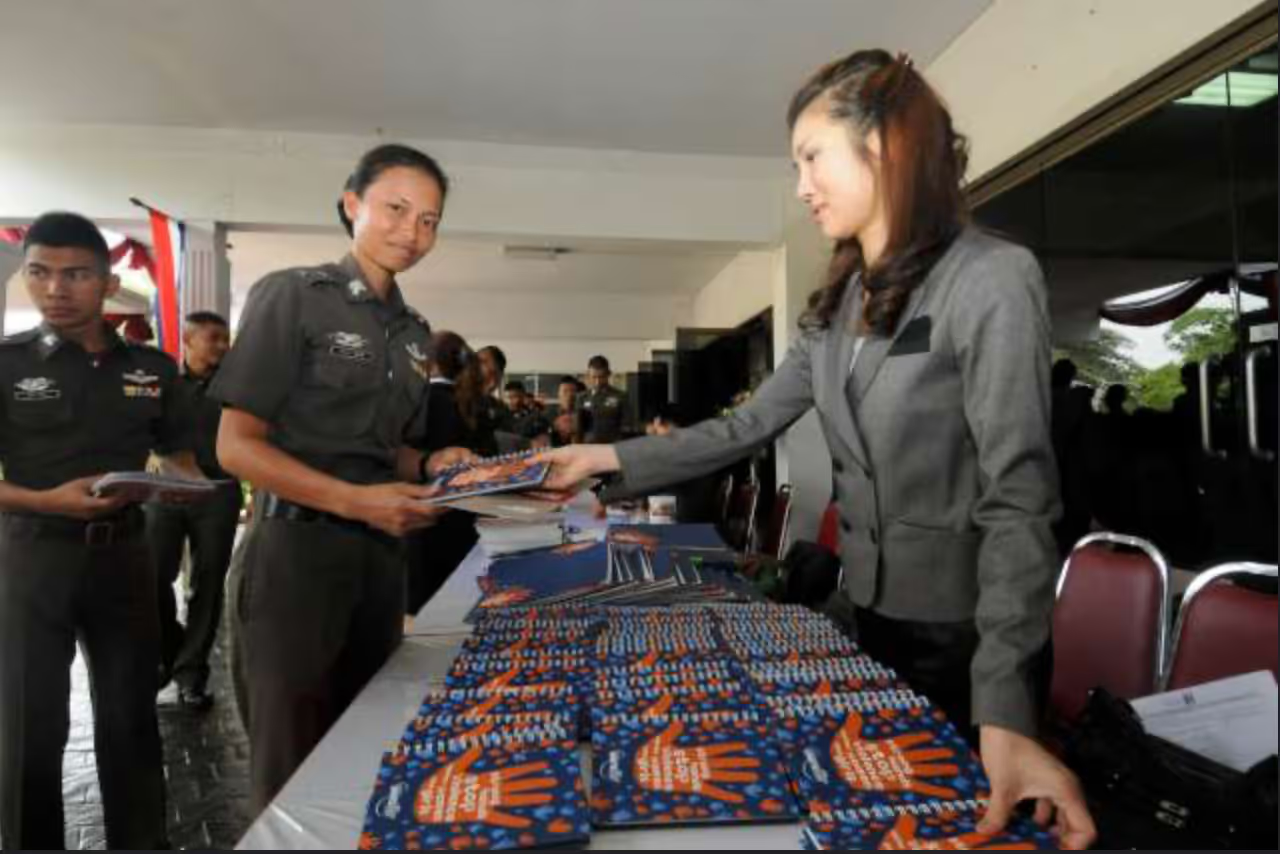
Thailand hosted a regional workshop held in Bangkok in February 2024, aimed at making community-oriented policing more accountable, inclusive and representative of all community members. Representatives from eight different states in the region participated in the workshop.
With support from UN Women and the Republic of Korea, Brigadier General Nov Ratana participated in the exchange of promising strategies and practices between representatives of the eight Asian national police services. Brig Gen Ratana is the Deputy Commissioner for Anti-Human Trafficking and Protection of Children and Gender Work at the Provincial Police Commissariat of Kratie, Cambodia. She has been in the police service for 17 years. At the workshop, she went on to say:
"The term ‘police’ in Khmer means the ‘guardian of the kingdom’, so our role is to maintain security, order and safety for the people. My father motivated me to become a police officer. He had experienced legal issues related to land boundaries, so he wanted his daughter to know about the law.
At that time, women police officers comprised less than two per cent of the police in Cambodia. The reason was related to tradition. People thought this profession was only for men.
Now, I’m confidently saying that public perceptions have changed significantly as people have seen women police officers helping to solve their problems. There is growing recognition that women can serve communities and the nation. Today, around 10 per cent of police officers in Cambodia are women and I see the number of women applicants is increasing significantly."
On the topic of community-oriented policing in Cambodia, Brig Gen Ratana continued to say:
"In our police service, we have been doing community-oriented policing gradually, but it’s not yet comprehensive. For example, we have outreach programs in collaboration with relevant authorities such as the Department of Women Affairs and Department of Social Affairs. Together, we raise awareness in the community of the law. We let the community know the emerging crime trends and the tricks of perpetrators so they can relay this to their families.
At the same time, while we are performing awareness raising, we hear about the problems from the community. If we can solve them on the spot, we will do so. For other problems, we will find the relevant stakeholders to solve them.
We also have a mechanism of monitoring and evaluation whereby we receive feedback in order to make improvements to policing, and ensure implementation is done in a transparent manner in accordance with the law.
It’s very important to have policing that is gender-responsive. This practice helps us to respect human rights and victims’ rights. At the UN Women regional workshop, I learnt a lot from the experiences of officers from other countries about making community-oriented policing more gender-responsive. I have taken this knowledge back and plan to implement new ideas within the existing mechanism in my country."
Regarding advice for women considering a policing career, Brig Gen Ratana stated:
"I think it’s important to have women in senior leadership roles in the police force. Firstly, it’s to represent women's voices. When there is a leader who has the right to express her opinion and the right to make decisions, then she can change the mindsets around gender inequality and discriminatory traditions.
I love my work because it’s not just a job. It’s part of helping support my family and it’s an opportunity to help society. But it can be challenging, especially the work-life balance.
The message I would like to share with young women is that I am a woman with many responsibilities, yet I can serve in the police force at a senior level. You must dare to seize the opportunity given and work hard to get good results and build solidarity both inside and outside the police service. All of you can do it too and do it better than me.”
To read the original article, see here
May 15, 2024
Thailand hosts regional workshop on community-oriented policing
May 15, 2024
Thailand hosted a regional workshop held in Bangkok in February 2024, aimed at making community-oriented policing more accountable, inclusive and representative of all community members. Representatives from eight different states in the region participated in the workshop.
With support from UN Women and the Republic of Korea, Brigadier General Nov Ratana participated in the exchange of promising strategies and practices between representatives of the eight Asian national police services. Brig Gen Ratana is the Deputy Commissioner for Anti-Human Trafficking and Protection of Children and Gender Work at the Provincial Police Commissariat of Kratie, Cambodia. She has been in the police service for 17 years. At the workshop, she went on to say:
"The term ‘police’ in Khmer means the ‘guardian of the kingdom’, so our role is to maintain security, order and safety for the people. My father motivated me to become a police officer. He had experienced legal issues related to land boundaries, so he wanted his daughter to know about the law.
At that time, women police officers comprised less than two per cent of the police in Cambodia. The reason was related to tradition. People thought this profession was only for men.
Now, I’m confidently saying that public perceptions have changed significantly as people have seen women police officers helping to solve their problems. There is growing recognition that women can serve communities and the nation. Today, around 10 per cent of police officers in Cambodia are women and I see the number of women applicants is increasing significantly."
On the topic of community-oriented policing in Cambodia, Brig Gen Ratana continued to say:
"In our police service, we have been doing community-oriented policing gradually, but it’s not yet comprehensive. For example, we have outreach programs in collaboration with relevant authorities such as the Department of Women Affairs and Department of Social Affairs. Together, we raise awareness in the community of the law. We let the community know the emerging crime trends and the tricks of perpetrators so they can relay this to their families.
At the same time, while we are performing awareness raising, we hear about the problems from the community. If we can solve them on the spot, we will do so. For other problems, we will find the relevant stakeholders to solve them.
We also have a mechanism of monitoring and evaluation whereby we receive feedback in order to make improvements to policing, and ensure implementation is done in a transparent manner in accordance with the law.
It’s very important to have policing that is gender-responsive. This practice helps us to respect human rights and victims’ rights. At the UN Women regional workshop, I learnt a lot from the experiences of officers from other countries about making community-oriented policing more gender-responsive. I have taken this knowledge back and plan to implement new ideas within the existing mechanism in my country."
Regarding advice for women considering a policing career, Brig Gen Ratana stated:
"I think it’s important to have women in senior leadership roles in the police force. Firstly, it’s to represent women's voices. When there is a leader who has the right to express her opinion and the right to make decisions, then she can change the mindsets around gender inequality and discriminatory traditions.
I love my work because it’s not just a job. It’s part of helping support my family and it’s an opportunity to help society. But it can be challenging, especially the work-life balance.
The message I would like to share with young women is that I am a woman with many responsibilities, yet I can serve in the police force at a senior level. You must dare to seize the opportunity given and work hard to get good results and build solidarity both inside and outside the police service. All of you can do it too and do it better than me.”
To read the original article, see here
